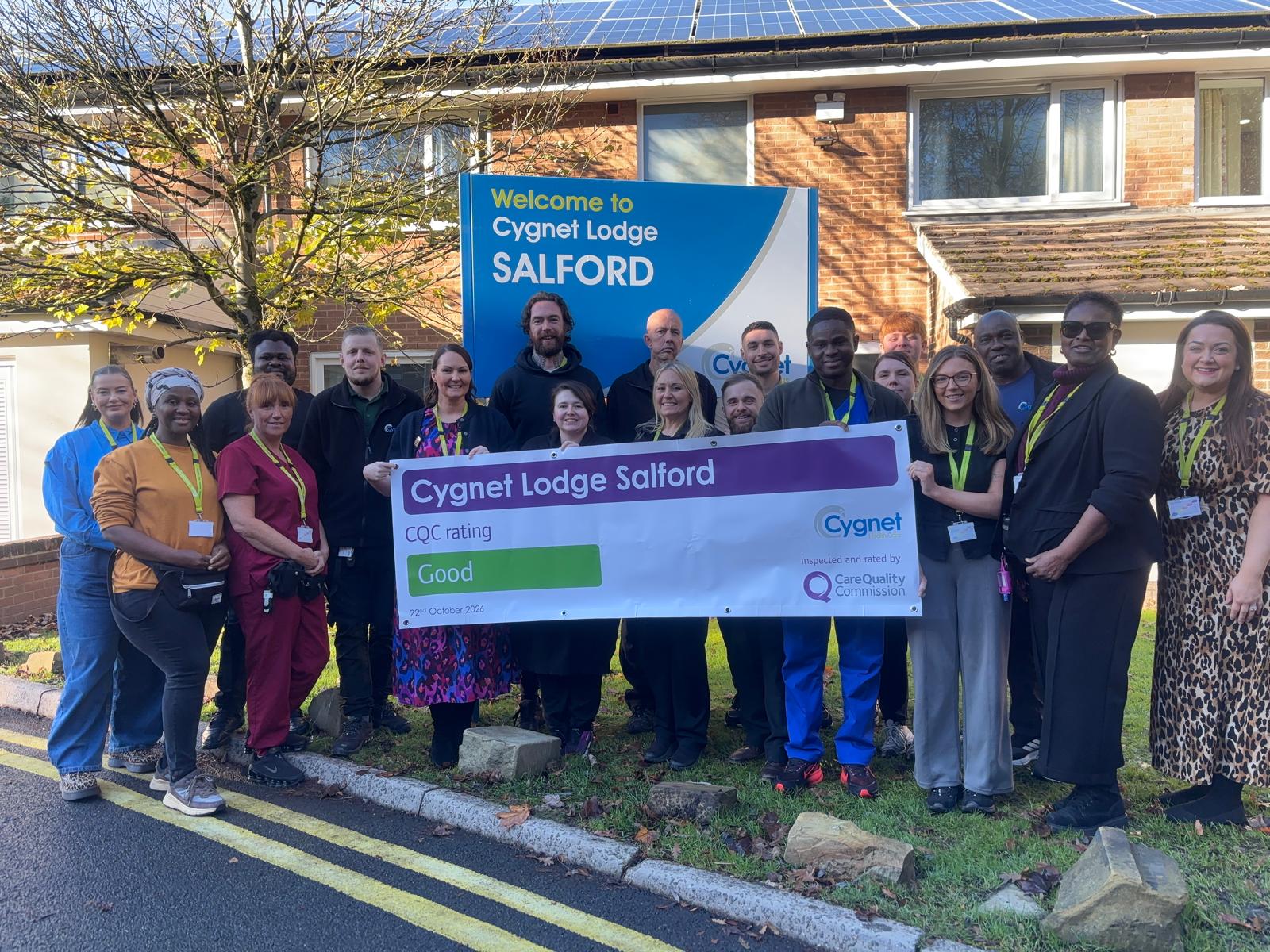
The findings follow an inspection carried out in July 2026 with the service rated Good overall, with Caring, Well-led, Effective and Responsive all rated Good.
Cygnet Lodge Salford provides high-dependency inpatient rehabilitation for up to 24 women. The service also has three apartments where patients can develop and practise independent living skills as part of their progression towards discharge.
Inspectors spoke with six patients, five carers and received feedback from five stakeholders. One patient told inspectors: “It’s the best hospital I’ve been too, its lovely, staff are lovely.”
Patients described staff as “approachable, friendly and respectful.” They also spoke positively about the activities available, including psychology groups, walking groups, cooking and the salon.
Highlighting the kindness of staff, the regulator said: “The service always treated people with kindness, empathy and compassion and respected their privacy and dignity.
“Staff attitudes and behaviours when interacting with patients showed that they were discreet, respectful and responsive, providing patients with help, emotional support and advice at the time they needed it.”
The report said patients felt involved in their care, including reviews and planning for leave and discharge. Patients also had access to advocacy services and said they knew how to raise concerns.
Carers told inspectors they felt involved in their loved ones’ care and that staff listened to them. The report noted that staff accommodated carers’ needs and circumstances when arranging visits.
Stakeholders also reported positive experiences of the service. CQC said stakeholders described the service as responsive to requests, open and transparent, and willing to act on feedback to improve patient experience and quality of care.
The report stated: “The service had demonstrated improvement, and stakeholders told us their review showed the improvements embedded into routine practice.”
Inspectors recognised changes to the hospital environment since the previous inspection, including updated furniture and décor and improvements to communal spaces.
The report noted that patients had been involved in decisions about these changes. The lounge had been redecorated and repurposed as a social hub, with patients choosing the décor. The salon had also been relocated to provide a larger, quieter space and to spread activities across the building.
CQC said: “All ward areas were clean, had good furnishings and were well-maintained.”
CQC identified improvements in medicines management and found that actions required following the previous inspection had been completed.
The inspection highlighted the role patients played in shaping their care and the service.
Patients were involved in creating their care plans and risk assessments and staff also used accessible communication tools, including easy-read documents, visual day planners and mood communication systems, to help patients express their needs. Patients were supported to access the local community and take part in activities outside the hospital. The report highlighted links with the Canal and River Trust, which enabled patients to gain vocational experience through a canal clean.
The service also provided opportunities for patients to develop practical skills and work towards greater independence, including through occupational therapy assessments covering areas such as shopping, sleep, personal hygiene and kitchen skills.
The regulator upgraded the Well-led rating from Requires Improvement to Good, with inspectors recognising changes in leadership, staff engagement and the culture of the service.
Inspectors also noted that staff felt able to raise concerns about disrespectful or discriminatory behaviour towards patients.
The report read: “Staff told us of the changes in the culture since the last inspection, they felt valued, supported and listened to.
“Leaders had the skills, knowledge, experience and credibility to lead effectively. They did so with integrity, openness and honesty.
“The service focused on continuous learning, innovation and improvement across the organisation and local system. They encouraged creative ways of delivering equality of experience, outcome and quality of life for people.”