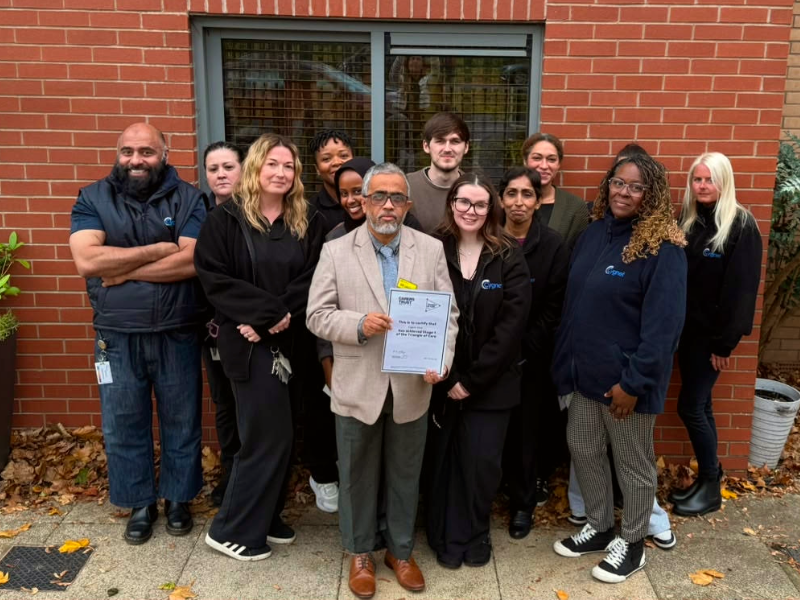
The accreditation recognises the service’s commitment to working in partnership with families and carers, ensuring their knowledge and experiences help shape the care and support provided to service users at the 10-bed care service on Streetly Road which supports women with learning disabilities.
In their report, assessors said: “Throughout the submission, we saw a genuine commitment to involving carers as partners in care.
“We saw a service that values families, communicates with care and is open to learning and improvement.”
They also highlighted the positive experiences shared by a family carer, noting: “The carer described staff as approachable, responsive and informative and spoke positively about communication and support from the team.”
The report concluded: “Overall, we saw a service that values families, communicates with care and is open to learning and improvement.”
Sarah Jenks, Hospital Manager at Cygnet Elms said: “We are delighted to have achieved this accreditation, which recognises the importance we place on working closely with families and carers. They know their loved ones in ways that are invaluable to our teams, and their insight helps us provide support that is tailored to each individual.
“We want every family and carer to feel listened to, supported and confident that their views matter. This achievement reflects the commitment of colleagues across Elms to building positive relationships with families, and we will continue to listen, learn and look for ways to strengthen the support we provide.”
Assessors praised the involvement of staff from across the multidisciplinary team, including nursing, psychology, occupational therapy and speech and language therapy. They noted that family involvement was embedded in everyday practice rather than being the responsibility of one individual.
The report read: “We saw clear organisational commitment and visible leadership for carer engagement. We were also pleased that the whole multidisciplinary team appeared to share responsibility for carers rather than leaving it only to the Carer Lead.”
Families are offered a range of opportunities to contribute to their loved one’s care, including ward rounds, Care and Treatment Reviews and discharge planning discussions. Staff also maintain contact through telephone calls, emails, surveys, welfare checks and carer clinics, ensuring involvement does not depend on attending formal meetings.
Assessors noted: “We saw good evidence of carer involvement at the level of individual care.”
They also highlighted how the service’s approach helps ensure family members can remain involved in ways that work for them, including those who live considerable distances away.
The report also highlighted the important role families play in helping staff understand each individual’s needs. Carers contribute information about personal routines, preferences, communication styles, family history and behavioural triggers, helping staff develop a fuller understanding of the person they support.
Assessors said: “Staff contributions throughout your showcase suggested that carer awareness is influencing day-to-day practice. Team members spoke positively about gathering information from carers, maintaining ongoing dialogue and recognising carers as partners in care. We heard examples of carers contributing to psychological formulation, care planning and wider decision-making, demonstrating that family knowledge is valued and used.”
They also heard examples from psychology staff demonstrating how family knowledge contributes to a better understanding of individuals and helps shape appropriate support.
Alongside involving families in care, Cygnet Elms recognises that carers may need support themselves.
The report stated: “You clearly recognise carers as individuals with their own support needs and not simply as a source of information about the person they support.”
Assessors highlighted examples of staff providing emotional support, sharing information and helping carers connect with external sources of assistance. They also noted how staff consider travel arrangements and caring responsibilities, check on family members following visits and maintain contact outside formal meetings.
The report described these examples as reflecting “a genuinely compassionate approach to family engagement”.
The accreditation review also recognised the service’s investment in helping staff understand the experiences of carers and the importance of working alongside them.
Staff have completed carer awareness e-learning, with completion actively monitored, and training has been co-developed with carers. The service has also provided opportunities for a family carer to share their lived experience directly with staff.
Assessors said: “We are pleased to see you trying to go beyond mandatory training and help staff better understand carers’ experiences.”
The review highlighted the use of easy-read documentation as another strength, helping ensure information is accessible to the people receiving care.
The service’s Carer Handbook was also praised for providing practical information about the service, staff team, visiting arrangements, confidentiality, advocacy, complaints procedures, care pathways and available support.
Assessors particularly welcomed the inclusion of staff photographs and personal information about team members, noting that this helps create a more approachable and welcoming introduction to the service.
The report added: “There is good evidence that carers are introduced to the service, receive helpful information and can stay in touch in flexible ways.”
Mary Patel, Triangle of Care Programme Lead at Carers Trust, said: “This Triangle of Care accreditation represents a hugely positive step forward in strengthening partnerships with carers – so family and friends who look after someone with mental health needs are involved in care planning, and have their important role recognised. Congratulations to all the staff and carers at Cygnet Elms for this achievement, and we encourage everyone involved – from frontline staff to senior leads – to continue building on this foundation of good practice.”