Cygnet Bed Hub: 0808 164 4450
Social Care Referrals: Make a referral

Our national network of specialist personality disorder services offers over 225 beds across medium secure and low secure, emergency, tier 4 inpatient, intensive support, highly specialised ICB funded personality disorder, dual diagnosis PD, disordered eating and community rehabilitation services.

Each of our personality disorder services offer a highly structured environment designed to promote recovery. Care and support is provided in therapeutic environments by comprehensive multi-disciplinary teams.

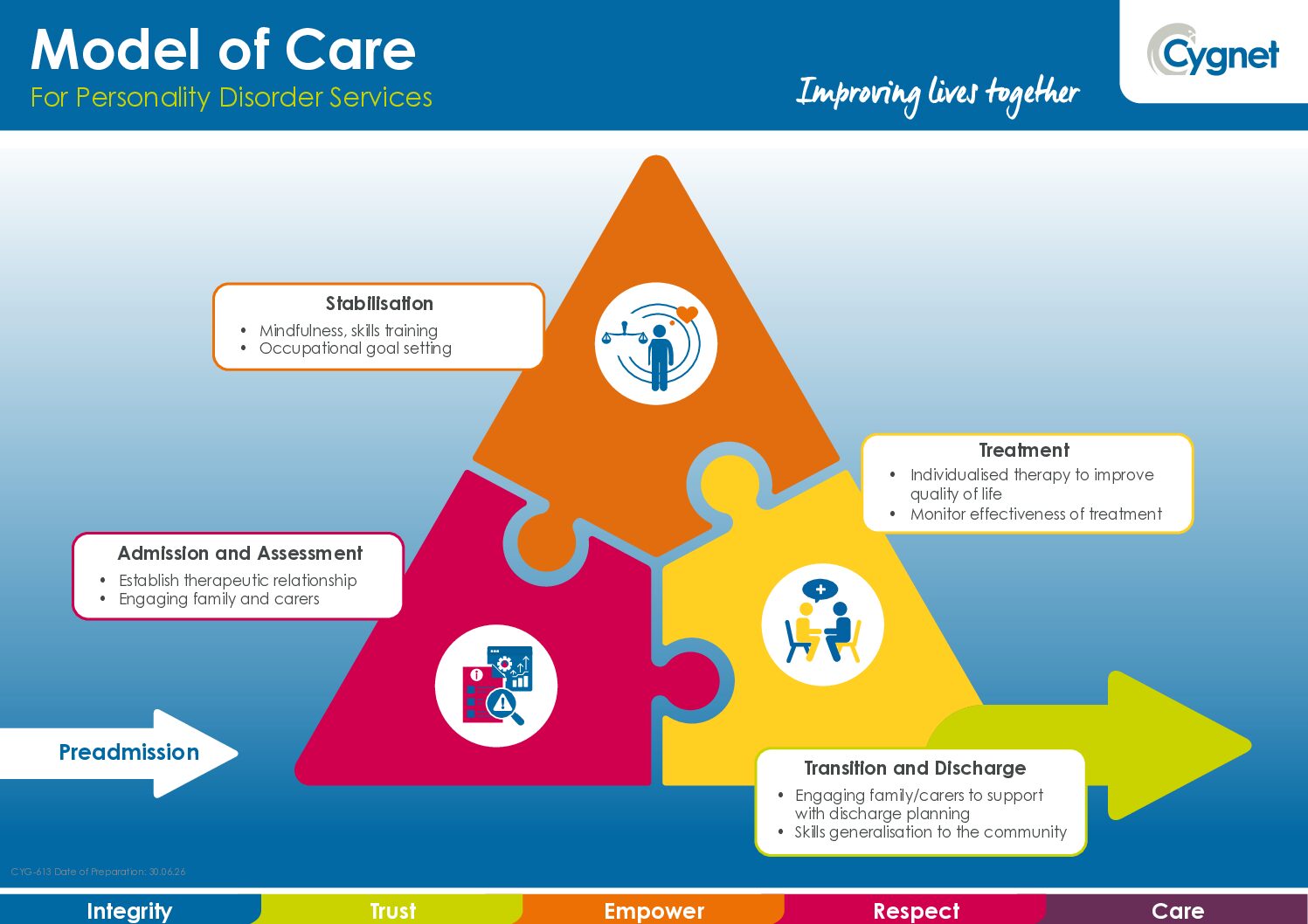
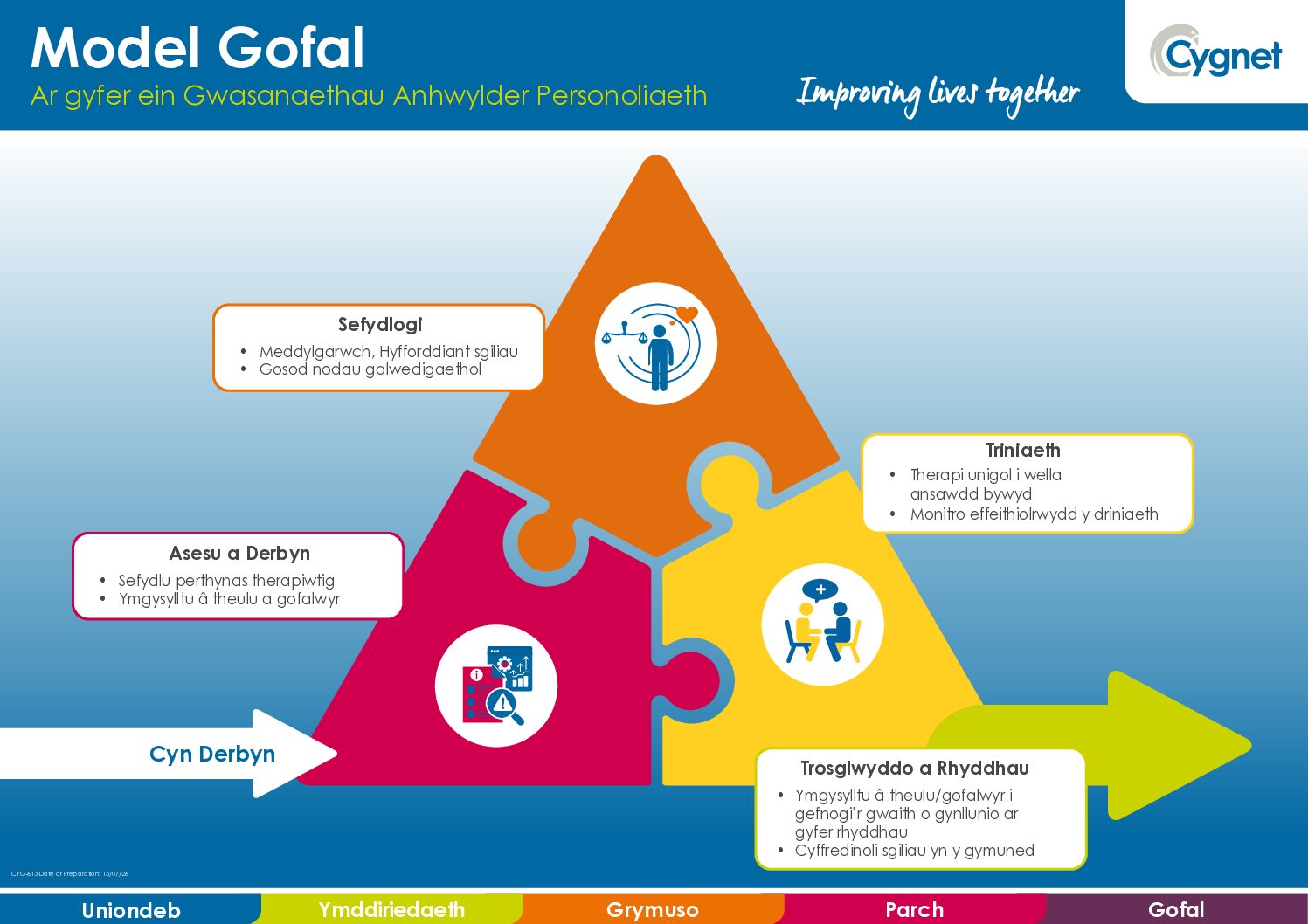
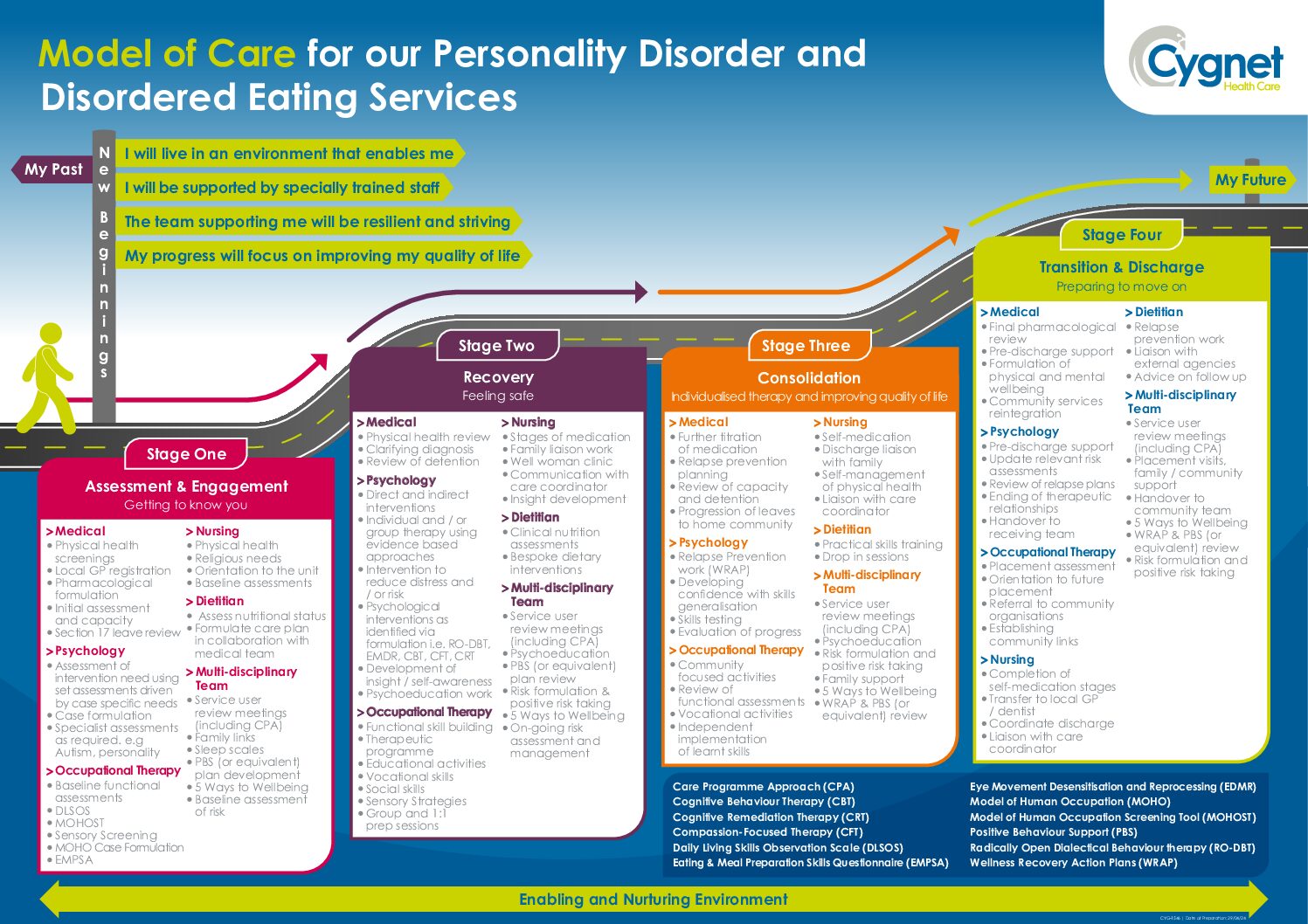
We have collaboratively created our model of care based on an integrated approach whereby family, service users, commissioners and carers are all involved in the rehabilitation and recovery of the individual.

Our services offer a range of interventions including Dialectical Behaviour Therapy (DBT) and Schema Focused Therapy, along with a number of additional interventions to enhance service users’ recovery journey.

To ensure we cater for each person’s journey and achieve long-term results, we have created a unique approach to care for people with personality disorder. Our aim is to support clients to work towards a goal of discharge in to the community or step down settings following completion of treatment.

myPath is our unique overarching care model which serves to monitor service user engagement levels, manage their records, assess individual progress and formulate a personalised and dynamic care plan with measurable targets.

Within our personality disorder services, myPath is structured to support individuals who require specialist therapeutic interventions including Dialectical Behaviour Therapy (DBT) and Schema Focused Therapy (SFT). It is designed to help service users tackle their symptoms and progress with their lives. In addition, these services support with preparation for an independent life within the community, or for moving on to mainstream rehabilitation.

For each individual, a daily risk assessment is completed, which enables dynamic responses to individual presentation within any 24 hour period enabling immediate support to be provided. Each individual is offered a minimum of 25 hours meaningful activity a week, which is evidenced and documented within an individualised activity timetable based around understanding mental health needs, effective coping strategies and reinforcing daily living skills. Each individual’s care pathway is reviewed in full by the multi-disciplinary team on a weekly basis and guided by a dynamic care plan which is closely linked to our specialist outcome tool, the Global Assessment of Progress (GAP).

In our personality disorder services, the GAP allows us to measure an individual’s progress during their admission, plot the positive developments and changes in well-being whilst formulating plans over potential future risks for longer term management. In applying myPath, the team around the individual is able to be responsive in their approach and use myPath to determine length of stay, ensuring that people move as quickly as possible to the most appropriate and least restrictive environment.

Below is an example DBT Pathway.

Pre-admission assessment

  • Including assessment of willingness and capacity to engage in DBT and the suitability of the programme in meeting the service user’s needs

Admission

  • Psychological / DBT assessment and formulation
  • Assess motivation to engage in DBT
  • Explain 4-miss rule (if a service user misses 4 consecutive sessions they have ‘opted out’ of DBT)
  • Baseline outcome measures administered

DBT programme pre-commitment work

  • Service user and therapist sign DBT contract
  • Agree DBT enrolment date in line with the next module start

Begin comprehensive DBT

  • One standard treatment cycle = 2 x 6 month rounds
  • Psychometric measures to be readministered every 6 months

Completion of DBT

  • Psychometric measures to be readministered at end of the programme

Frequently asked questions

A personality disorder is a long term pattern of thoughts, feelings and behaviours that can make everyday life difficult. People may struggle with emotions, relationships or coping generally. With the right specialist support, many people learn new skills (particularly in managing emotions and relationships), feel more in control and achieve a meaningful recovery.

Our personality disorder services support adults with complex emotional needs who find it hard to manage emotions or relationships and need more structured, specialist help than is available from local community services. This includes people with a diagnosed personality disorder, complex trauma or similar difficulties, sometimes alongside other issues like, anxiety, autism or substance use. We provide specialist rehabilitation as well as low & medium secure services.

We offer a range of therapies to help people understand their emotions, build coping skills and improve wellbeing. This can include Dialectical Behaviour Therapy (DBT), Cognitive Behaviour Therapy (CBT), Schema Therapy, EMDR and other evidence-based approaches, delivered in both group and, individual formats. Our multi-disciplinary teams include occupational therapy and psychology as well as psychiatric professionals.

It depends on the placement goals that are agreed with the care team. Everyone is different. Some people stay for a few months, while others need longer support, sometimes more than a year. We regularly review progress to make sure each person is in the right place for their needs.

Referrals usually come from NHS professionals, either direct from commissioners or (more often) from Care Coordinators and Social Worker in other mental health services. We look at each referral carefully to make sure the service is the right fit.

BPD (Borderline Personality Disorder) and EUPD (Emotionally Unstable Personality Disorder) are the conditions that are referred to us most frequently.

People with BPD/EUPD may experience overwhelming emotions, sudden mood changes, difficulties in relationships, or feeling unsure about themselves. These experiences can be distressing, but with the right support and structured therapy, many people learn effective ways to manage their emotions and build a more stable and fulfilling life.

For more information on our personality disorder services please use the search filter below.

Filter Personality Disorder

2 Beds available
Clarion Ward
  • Highly Specialised Personality Disorder (ICB)
  • Personality Disorder / Disordered Eating Dual Diagnosis

Clarion Ward

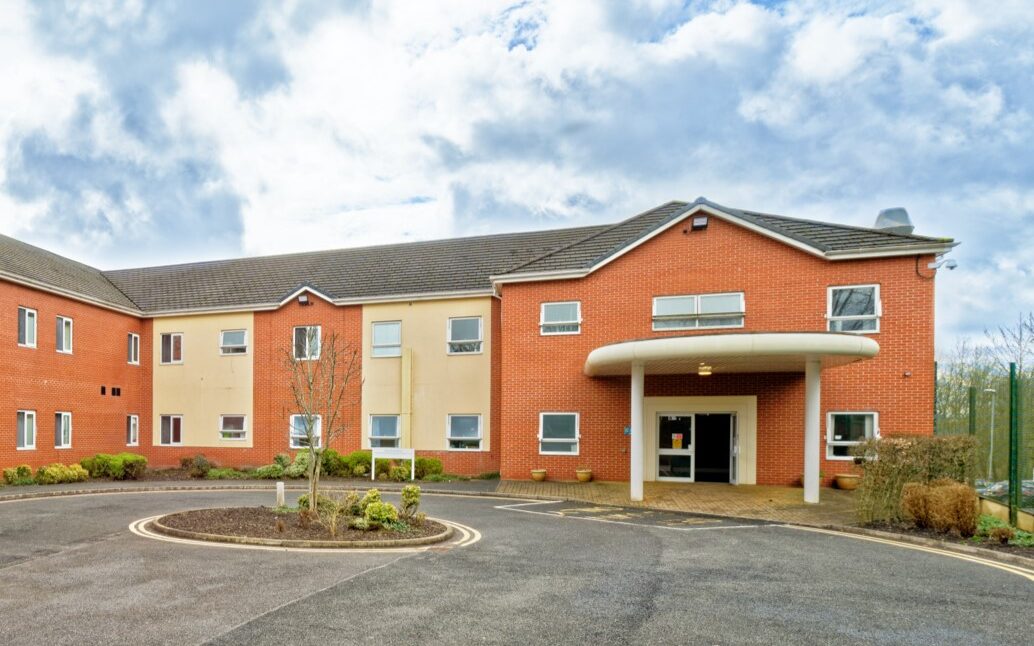
Cygnet Nield House

Barrows Green, Bradfield Road, Crewe, Cheshire, CW1 4QW
Make a referral

Search for bed availability