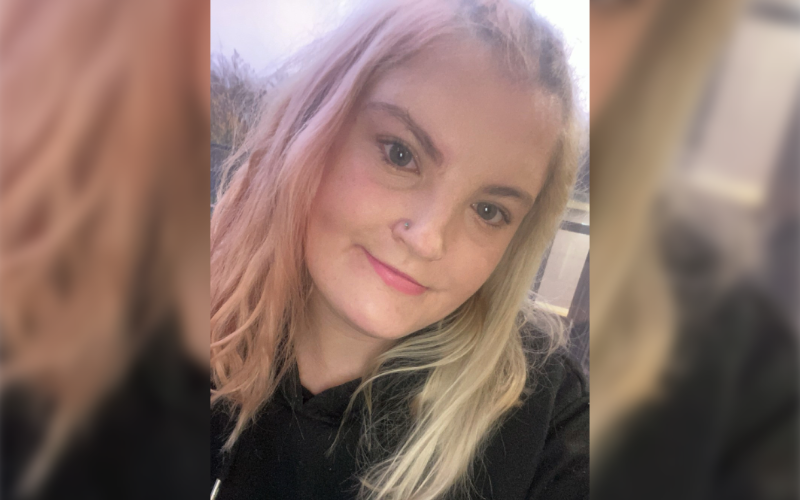
Early struggles and hospital admissions
I started struggling with my mental health in my teenage years which resulted in me being hospitalised for quite a few years, after being referred to CAMHS outpatients and being too unwell to be safe in the community.
I spent time on CAMHS inpatient wards, both Acute and High Dependency Units (HDUs) and then at the age of 18, I then began years of being passed between adult Acutes and PICUs, and a rehab, all over the country. Finally, I was sent to Cygnet Acer Clinic, lower ward. I’m now 24 and ready to be discharged.
I’ve been on countless wards where I genuinely felt so alone and had a really hard time trusting staff because I moved around so often. I’d get ‘stable’ and then decline again, and was classified as ‘complex’ – I was never on a ward long enough to trust the staff and so didn’t really do the work that needed to be done in order for me to get to where I am today.
Finding support at Cygnet Acer Clinic
However, I was lucky enough to get placed in Cygnet Acer Clinic. It was the first hospital that did not give up on me, they made me believe I could be whoever I wanted to be, regardless of my struggles.
My experience of hospital up until I got admitted to Acer was poor. I was made to believe that I was ‘too complex’ to ever get to a point where I’m at now. I’d given up on myself, because it felt like everyone else had given up on me.
I now have the right tools to be able to cope with the bad days but also allow myself to enjoy the good. I have learnt DBT skills within psychology groups. Through trial and error, the ones that I’ve found work best for me are:
- The TIPP skill (Temperature, Intense exercise, Paced breathing, and Progressive muscle relaxation)
- STOP skill (Stop, Take a step back, Observe, and Proceed mindfully)
- Compassion work towards myself
I also learnt how to set healthy boundaries, which is still on-going work, but I feel more confident around boundary setting due to the support I’ve received.
Building trust and independence
The staff at Acer have really helped me reach my potential. The consistent approaches from the staff team have embedded new independence skills, which means I was able to engage in a volunteer job, which I never thought I’d be stable enough to do.
I’ve learnt it’s okay to trust people, through having constant support when I’ve needed it and being offered a safe space to talk freely about my feelings. Having built trust with the staff here it has helped me change my view on how I see the world but also myself, this is because the staff had confidence in me until I learnt to have it in myself.
Looking ahead: goals for the future
I now have goals for my future which, to be honest, I never thought I would because I was so determined not to be here. But now, I want to be an expert by experience and slowly progress to become a mental health nurse, I want to travel, and I just want to be happy. Which, I now know I can do whatever I want in life because staff have shown me no goal is too small once you put your mind to it.
My advice to someone going through a hospital or just starting their recovery journey is this: throw yourself into everything you are offered. No matter how difficult it may seem, it will truly be worth it in the long run. It’s okay not to be okay, it’s just about acknowledging and managing emotions if/when they come and accepting the support offered. Most importantly, it’s never too late to choose recovery and live a life you deserve.
I have conquered most of my demons whilst being at Acer and I will continue to use the skills I’ve learnt at Acer to get through life’s challenges to lead the life I want. I am now able to move onto the next step of my life due to the support received at Acer. I will always be grateful for the staff at Acer because they gave me my life back.