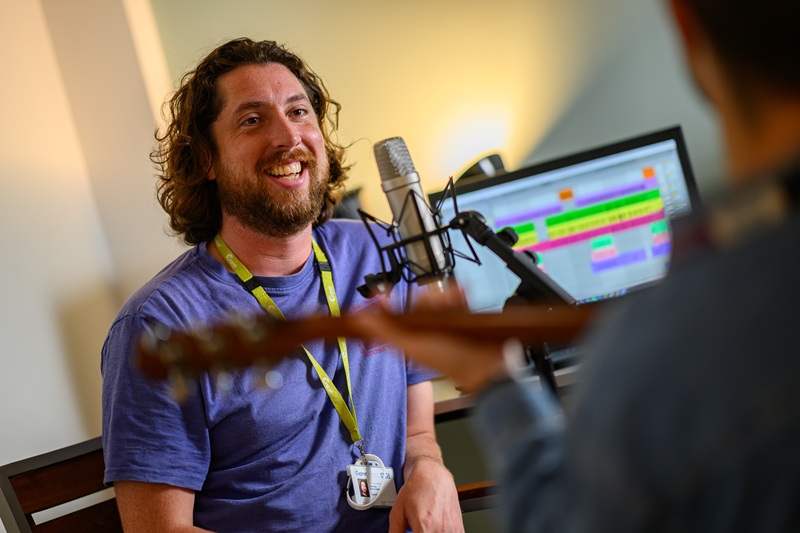
When using music as a therapeutic tool, it’s important to understand the needs of each individual. From high-energy recording sessions to quiet, grounding 1:1s, our goal is to deliver something meaningful for the people we support.
In typical or longer-stay rehabilitation services, staff are usually able to take time to build rapport and work 1:1 with individuals over months. However, in Acute services and PICUs (short-term wards for those in crisis), the pace is much faster, and the needs are more immediate.
When preparing music sessions across different services, I always consider the intent of the session. From here, I can then tailor my approach based on the service environment and facilities to deliver what will be most effective for the people at each ward.
At Cygnet Churchill, on our male acute services, the focus is on occupational identity. Service users often look toward life after discharge. Many of the men supported here are looking to reconnect with a former passion or build a tangible skill they can take back into the community. We have a recording studio, which we are currently upgrading, that acts as a hub for self-expression. Service users write lyrics and record vocals, creating a finished product they can share with family, peers and caregivers.
In contrast, at our PICU at Cygnet Hospital Blackheath, the focus shifts to socialisation and expression. In a more restrictive environment, we use a “Pop-up Music Studio” to provide immediate emotional outlets. Here, the technicality of the equipment is less important than the sense of achievement and community gained from creating something together.
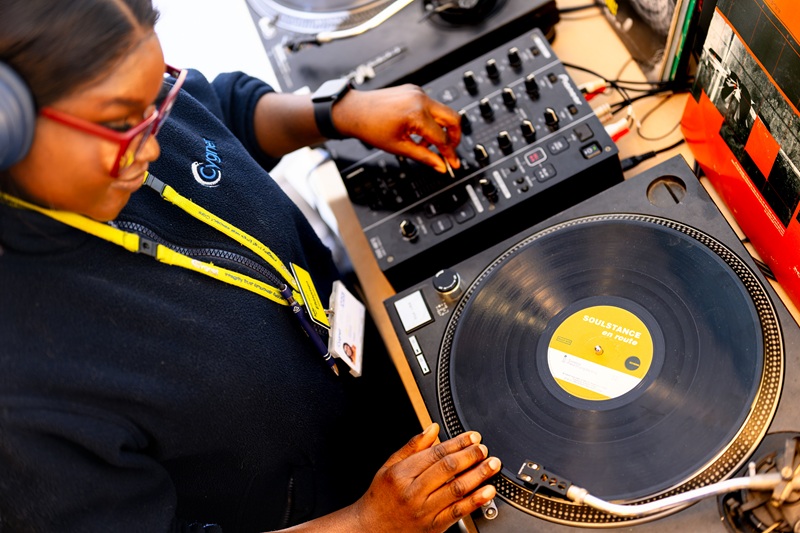
I run a weekly group on Hooper ward, our acute service at Cygnet Hospital Beckton. My approach here varies week to week to match the ward dynamic and mix of attendees. Sometimes, we simply listen to music together and might play or sing along. This can create a space where people learn to listen to each other, themselves, and the group as a whole; developing an understanding that connection and self-actualisation are greater than themselves as individuals. It can help to develop their empathy, consideration, and compromise through therapeutic collaborative musical engagement.
At Svanna Ward, the PICU at Cygnet Hospital Beckton, a less formal, 1:1 approach with shorter sessions is most effective. This allows the sessions to explore personal narrative and emotional safety. The sessions often become a safe space to express themselves through singing and songwriting.
Ultimately, the success of music as a therapeutic tool lies in its versatility. By tailoring our approach, whether through high-tech recording at Churchill or a bespoke 1:1 session at Svanna, we ensure that music remains a source of motivation and healing throughout the recovery journey.