The way we think about mental health environments is changing.
For too long, the conversation around healthcare estates could be dominated by the physical building itself, its condition, its capacity, its compliance and its efficiency. All of those things remain important, but increasingly, the question we need to ask is much broader. What does this environment enable for the people who use it?
How interior design can support mental health recovery
At Cygnet, we believe the environment has an important role to play in supporting recovery, improving experience and helping our colleagues deliver high-quality care. That means thinking beyond bricks and mortar and considering how a service feels to someone walking through its doors, how easy it is to navigate, whether there are spaces that provide privacy and dignity, and whether the environment gives people opportunities to connect, participate and feel a sense of ownership.
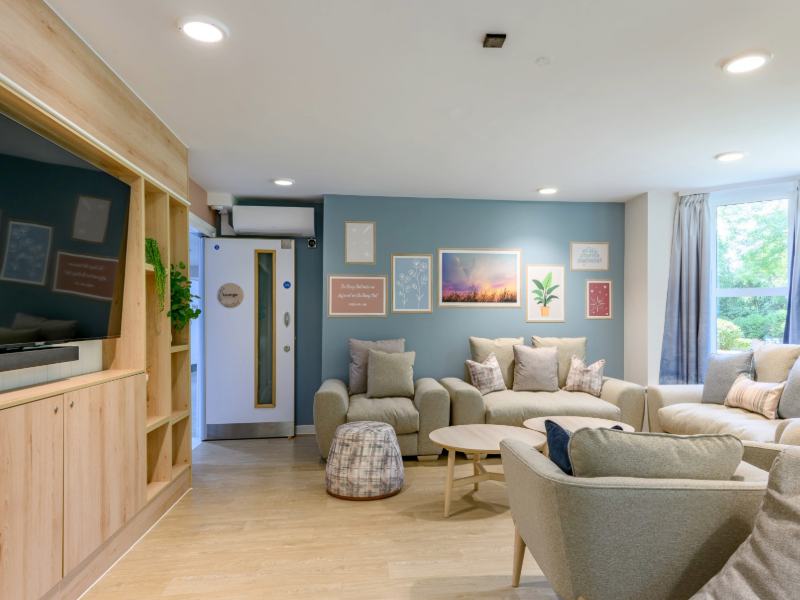
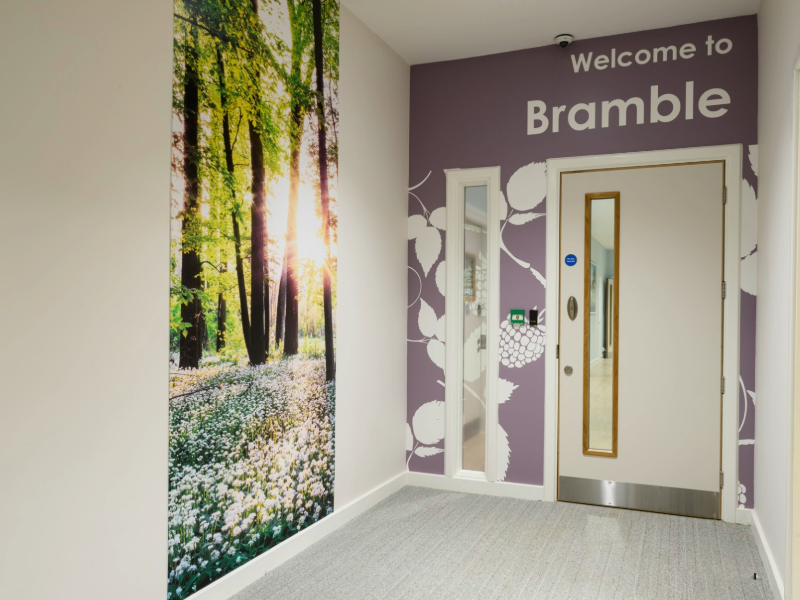
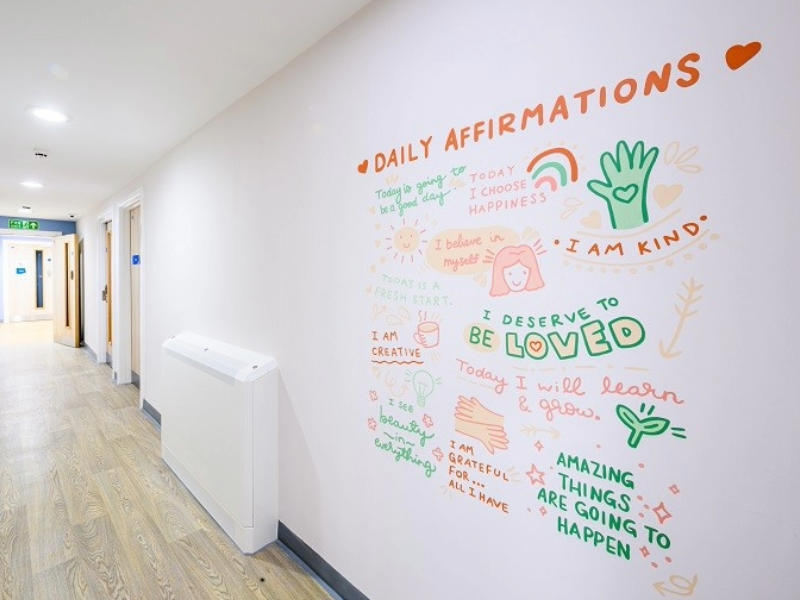
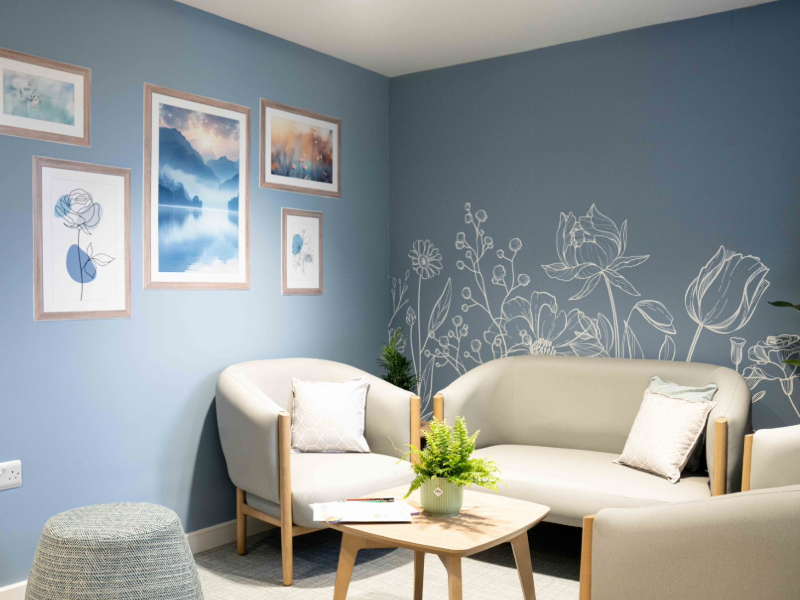
To ensure we think more holistically about the spaces we create and maintain we have a dedicated interior design team who consider the look, feel, sound and smell of our spaces. This includes sensory experiences on wards, acoustic design in flooring and ceilings to soften noise as well as thought and consideration to colour palettes and biophilic touches on glazing to promote a better space for mental health recovery.
Co-producing new mental health hospitals and spaces with lived experience
One of the most important ways we inform that thinking is through our Experts by Experience (EbE) programme. People with lived experience of mental health services bring a perspective that no design specification or technical assessment can replicate. They can tell us what works, what does not, and, perhaps most importantly, what we might otherwise overlook.
We have more than 50 Experts by Experience involved across Cygnet, with more than 1,000 visits taking place each year. Their contribution is helping us challenge assumptions about what a mental health environment should look and feel like. Cygnet’s approach to co-production is about involving people as equal partners, and that applies to the built environment as much as it does to care and service development.
This has been particularly important during a period of significant investment in our estate. Over the past two years, Cygnet has opened seven new hospitals, creating more than 230 specialist beds, while also refurbishing 181 existing beds. It is a substantial programme of investment, but the important thing is not simply the number of buildings we have opened or rooms we have refurbished. It is how we have approached their design.
Our new hospitals have been developed with service users, clinicians and Experts by Experience involved in the process, helping us understand what people actually need from the environments in which they receive care. That might mean thinking differently about communal areas, bedrooms, outdoor spaces, privacy, colour, lighting or the way a building feels when you first walk through the door.
Improving existing mental health environments with co-production
We have seen the same principle applied to existing buildings. Our Social Hubs are a good example. They came from feedback from service users who told us they wanted somewhere away from the clinical environment where they could relax, socialise and spend time in a more homely setting. Staff, patients and Experts by Experience have worked together to transform underused spaces, with everything from gaming areas and sensory lighting to more comfortable, informal spaces.
That is an important lesson for anyone working in healthcare estates. Improving an environment does not always require a new building or a major capital project. Sometimes the most meaningful changes come from listening carefully to the people who use a space and understanding what would make a difference to them.
Designing different spaces around different mental health needs
At Cygnet, we operate across a wide range of service lines, and there is no single blueprint for what a good mental health environment should look like. The needs of someone receiving support for autism or a learning disability can be very different from those of someone in a psychiatric intensive care or acute service, an eating disorder service or a residential setting, while considerations can also differ between male and female services. Understanding those differences is essential to creating environments that are not only safe and clinically appropriate, but genuinely support the individual needs, preferences and recovery of the people using them.
We know the complexity of need across mental health services is increasing, while demand continues to put pressure on the system. The environments we provide therefore need to be flexible enough to respond to different needs, while remaining safe and person-centred.
We also need to recognise that expectations have changed. People rightly expect mental health services to provide environments that offer the same standards of dignity, comfort, accessibility and quality that they would expect elsewhere in healthcare and in their everyday lives.
Creating better environments for patients and healthcare staff
The estate also has an important role to play in recruitment and retention. Our colleagues spend a significant proportion of their working lives within these environments. A well-designed, well-maintained workplace can influence how people feel about coming to work, their wellbeing, how they interact with colleagues and service users, and whether they feel proud of the environment in which they work. That means creating spaces that work for staff as well as the people receiving care.
There is also a wider opportunity here. If we design environments that feel more welcoming, less institutional and more connected to everyday life, we create places that are better for everyone who uses them, service users, families, visitors and colleagues alike.
The opportunity over the next few years is to move towards a more collaborative approach to the development of mental health environments, bringing together property, clinical teams, service users, carers, colleagues and Experts by Experience much earlier in the process.
Making the environment part of the recovery journey
For me, the most exciting opportunity is that we can use the estate as an enabler of better care rather than viewing it simply as the backdrop to care.
The best environments will be those designed around the people who use them. They will be safe without feeling restrictive, welcoming without compromising clinical requirements, and flexible enough to adapt as needs change.
Most importantly, they will be shaped by the voices of the people who know what it is actually like to use a mental health service.
If we get that right, the estate becomes much more than a collection of buildings. It becomes part of the recovery journey.