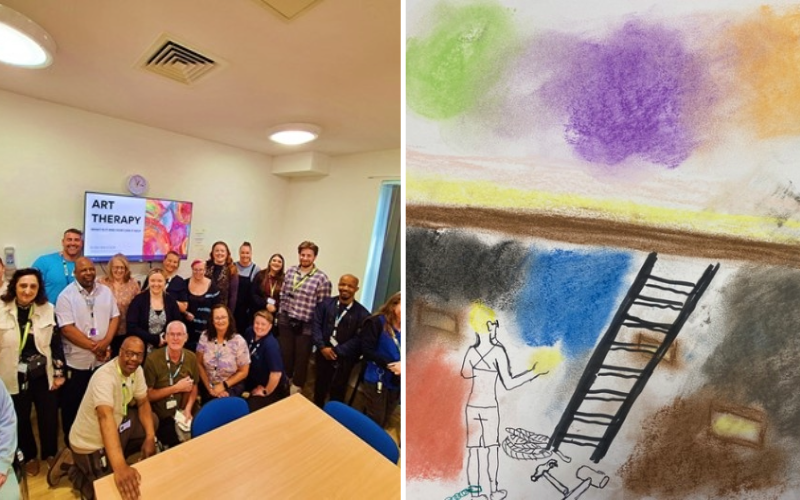
In this blog, Elisa Wilcock, Art Psychotherapist (pre-reg), explores how art therapy bridges gaps in mental health care and shares a real-life experience from Beth, a former service user at Cygnet Bury Dunes.
The Healing Power of Art Across History
While art therapy as a profession is relatively new, the idea that art making can be healing is ancient. Across cultures and history, creative expression has been used to communicate, regulate emotions, convey meaning, and promote wellbeing. Examples include:
- Cave paintings and Egyptian hieroglyphics
- Stained glass windows created by monks to communicate with those who could not read
- Religious sculpture, music, and dance in India
Throughout time, art has supported storytelling, memorialisation, self-regulation, and social change.
Modern Art Therapy: How It Works
Today, creative approaches continue to be used therapeutically. Examples include chromotherapy (colour therapy) in hospital design and established creative arts therapies such as art therapy, music therapy, dance movement therapy, and drama therapy. These approaches recognise that emotional expression and healing do not rely solely on spoken language.
Art therapy is an established form of psychotherapy delivered by qualified Art Therapists. It uses a range of art materials and processes to help individuals:
- Communicate thoughts and feelings
- Develop insight
- Self-soothe and emotionally regulate
No prior artistic skill is required – the focus is on self-expression and meaning-making rather than creating a ‘good’ piece of artwork.
Why Art Therapy Matters for d/Deaf Clients
Many d/Deaf individuals experience barriers within mainstream mental health services, which often rely heavily on spoken language. Art therapy helps bypass these linguistic barriers by placing creative expression at the centre of therapeutic work.
Through drawing, painting, sculpture, collage, and other art processes, d/Deaf clients can externalise thoughts and feelings without relying solely on language. This allows internal experiences to be represented more directly and authentically.
The Quadrilateral Relationship
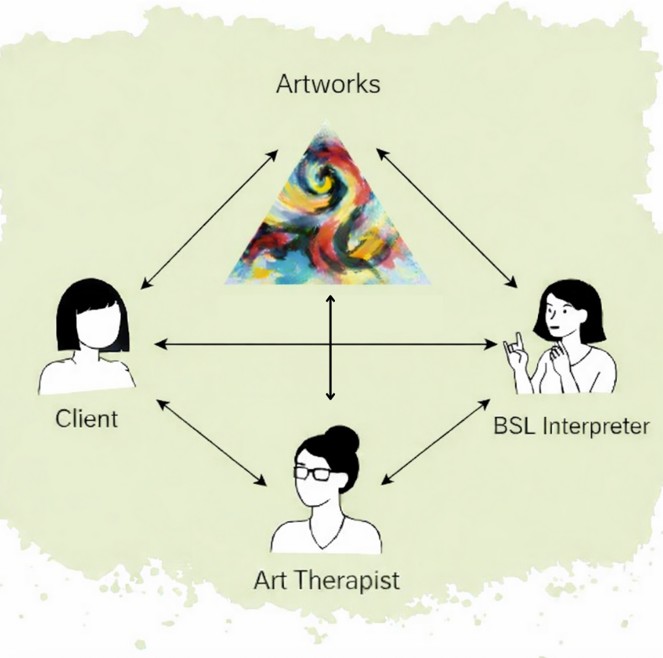
In art therapy, the therapeutic relationship is often described as triangular – client, therapist, and artwork. For d/Deaf individuals, this often becomes quadrilateral, involving:
- Client
- Therapist
- Artwork
- BSL Interpreter
This dynamic can present challenges, but the presence of tangible artwork provides a stable reference point that supports shared meaning-making. Together, these multiple forms of communication contribute to accessible, person-centred therapy.
Cultural Alignment
d/Deaf culture is inherently visual, with strong emphasis on gesture, sign language, and visual-spatial awareness. The symbolic and visual nature of art therapy aligns closely with these communication styles, making therapy culturally affirming and accessible.
At Cygnet Bury Dunes, d/Deaf clients benefit from an experienced in-house BSL interpreting team who support access to multiple therapies, including art therapy. Briefings and debriefings before and after sessions help ensure shared understanding and responsiveness to client needs.
Beth’s Story: A Personal Perspective
Beth experienced art therapy last year at Cygnet Bury Dunes and wanted to share her experience to raise awareness for other d/Deaf people:
“Art therapy worked for me because of how it was organised here. I had access to the same BSL Interpreter every week for my session, I worked with a therapist I knew and felt comfortable with, who also has Deaf awareness and can sign. I appreciated how she never judged my artwork and worked with me at my own pace to help me feel able to express myself and open up.
I really enjoyed my art therapy sessions here and they have helped me to grow so much, as in the past within other placements, the art therapy I had didn’t support me nearly as much due to lack of Deaf awareness within those settings. Things were different here and art therapy made a big difference for me.”
The Impact of Art Therapy on Mental Health for d/Deaf Clients
Art therapy offers a flexible, empowering, and culturally sensitive approach for d/Deaf individuals, addressing not only communication barriers but also the emotional effects of social isolation, stigma, and trauma. While research specifically focused on art therapy for d/Deaf clients is still emerging, evidence from similar groups highlights its potential to enhance psychological wellbeing, improve emotional regulation, and strengthen communication.
When delivered thoughtfully and accessibly – with support from qualified therapists and BSL interpreters – art therapy can bridge gaps in traditional mental health provision and foster meaningful, person-centred therapeutic engagement.