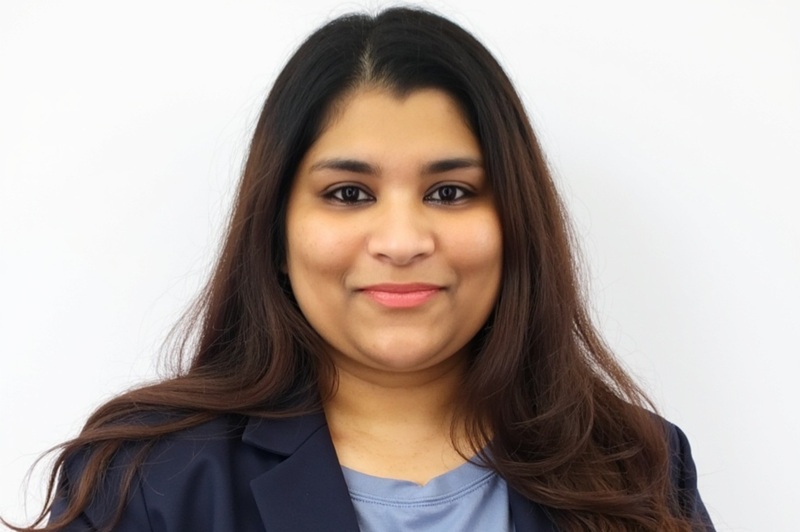
The journey to self acceptance often involves looking into the deepest, darkest corners of your mind and making sense of your shadows in a way that inspires you to move not just forward, but upwards in your life. For me, this journey started years ago, after some difficult experiences in medical school. I committed to the work, boldly and wildly. I went inward, I stayed there, and I kept going deeper.
And yet, through all of it, one question remained unanswered. Why do I feel so different? It wasn’t for lack of trying. I had done the work, genuinely and deeply. But this particular question had a different quality to it. Turning inward to sit with it, I slowly realised it didn’t need fixing. It needed recognising.
I started my employment with Cygnet as a Specialty Doctor at an autism and learning disability ward. I enjoyed working with my autistic patients so much that the ward and the shared space felt like home. The rhythms of communication made sense to me in a way that felt intuitive, almost cellular. I didn’t have to translate myself. I didn’t have to perform ease. It just was.
And then came the transition to a general acute ward. What I expected to be an adjustment became something that stretched on for over a year, with almost constant anxiety threading through every shift. The environment wasn’t hostile, but it felt relentlessly foreign in a way I couldn’t quite name or explain. The contrast was impossible to ignore. On one ward, I had felt like I belonged. On this one, I felt like I was perpetually stuck in a loop, looking in from the outside but never quite fitting in.
I had learnt to approach my challenges with compassion toward myself at this point, after years spent in training myself to do so. So I started by acknowledging my strengths as a provider and communicator with autistic people, and attributed the gap I perceived in the acute service to training, to exposure, and to time. I attended more workshops. I read more. I tried harder. And the more I tried, the more apparent it became that this wasn’t something training alone was addressing. I was in some kind of stasis. The relentless investigator that I am, I came to the conclusion that what was at play lived not in my skills, but in the fundamental nature of how I experienced the world.
“There is a sharp distinction to be made here. A problem asks to be solved. A difference is meant to be understood.”Dr Somya Pandey, Specialty Doctor in Psychiatry, Cygnet Hospital Harrow
And then came the conference I was attending at York. Somewhere in the middle of a session, a doctor began speaking about how they support their colleagues with neurodivergence. I remember trying very hard not to cry.
It wasn’t sadness, exactly. It was the particular ache of recognition of hearing your own private experience spoken aloud by a stranger, in a room full of people, and realising it had a shape, a name, a home. They were describing my life. The exhaustion I couldn’t explain. The environments that nourished and the ones that quietly drained. The years of trying harder when trying harder was never the answer. And here were so many others, feeling it too.
In the weeks that followed, I found blogs and articles written by other doctors about their lives as neurodivergent professionals, and it felt like they were singing the song of my life. I understood then that I needed to find out whether the inkling growing within me had a genuine basis.
The journey to finally getting an assessment was full of self-doubt.
- What if this was ‘just trauma’ that needed to be worked on? (Just as I had been doing all this while, but after intensive trauma work, something still didn’t make sense).
- What if I was just being lazy and avoidant of certain aspects of my work? (But I was working extra hours to make sure everything was perfect).
- What if this was just an excuse I was latching on to, to explain my lack of zeal and confidence in general adult acute?
- What if I was trying to take up space in a community where I didn’t belong? And how intensely would I be shamed for doing so?
The thoughts gained momentum with each passing day. And with every gentle step towards the decision to get formally assessed, emotions heightened and intensified. Self acceptance needed me to be aware of what aspect of me was asking to be embraced — but at this time, all I had was the ability to hold on to the handrails as the ground beneath my feet shook.
The assessment involved a series of questionnaires and a full day of conversations, by the end of which I was feeling heard and understood in ways I hadn’t been before.
When I received my diagnoses of Autism and ADHD, what I felt wasn’t shock. It was something closer to relief with depth. Like a key turning in a lock I hadn’t known was there. Suddenly, the years of exhaustion that had no visible cause made sense. The way I had always needed more recovery time than others after social demands. The hyperfocus that could make me extraordinary and the transition costs that could floor me. The texture of environments how some nourished and some depleted in ways I had never been able to articulate suddenly made sense too. My whole history rearranged itself into a more honest shape.
The process of acceptance took time, but not too long. I was fortunate to be supported by friends and colleagues who celebrated my differences. There’s something to be said about the ease with which you are able to embrace yourself when you feel accepted by others. A kind of deep contentment that isn’t conditionally dependent on how others view and react to you, but is informed and bolstered by it, without strings.
The presence of genuine acceptance in your immediate community can be life-giving. And so it became easier and easier, every day since the diagnosis, to honour who I am.
Truly, self acceptance for neurodivergence starts within. But how fortunate would we all be if we each had friends, colleagues, and communities that welcomed what we think are our sharp edges with open arms? I wish that for everyone.
So let this Autism Acceptance Month, and every one that follows, be about the neurodivergent person accepting themselves for who they are. And let the space around them be full of loving and compassionate embrace by the people that surround them.
Because neurodivergence is not a problem to be solved. It has always been a person waiting to be known. And the space we share it belongs to all of us. Belonging is not transactional. It is simply what we owe each other as human beings sharing the same world. When we create spaces where every mind is welcomed every person is allowed to exhale. And a humanity that knows how to do that for its most different members knows how to do it for everyone. We meet each other fully, and are each made richer for it. That is what belonging looks like when it is real.