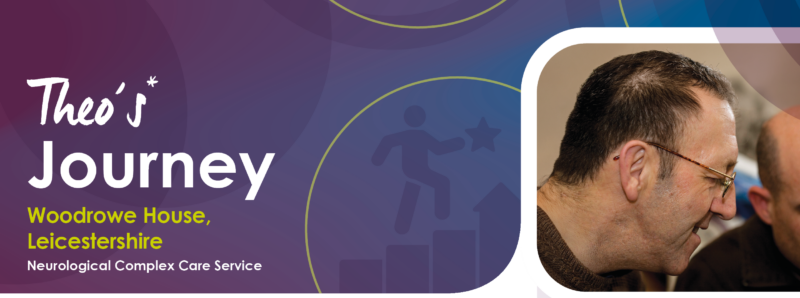
Theo’s* history
Theo was in his forties when he suffered a series of strokes. The impact was severe and included changes to his memory, speech, mood and mobility.
Theo was initially assessed by the General Hospital Stroke Team and received care from the Community Integrated Neurology and Stroke Service (CINSS). Due to the combination of co-morbidities he was facing, Theo was referred to Woodrowe House for a period of intensive neurorehabilitation.
When Theo came to us
Theo arrived at Woodrowe House feeling frustrated and reluctant to engage with another rehabilitation programme.
The team responded with patience and compassion, taking time to understand his needs and triggers. Their priority was to build a strong therapeutic relationship with Theo, starting with a tailored communication strategy that enabled him to express his feelings and needs more effectively.
Theo’s care
With a foundation of trust, the team uncovered an underlying fear. Theo was anxious about Woodrowe House becoming his permanent home.
Once staff reassured him that every exercise and therapy session was designed to help him regain his independence and return home, he became more motivated to engage in rehabilitation. With this reassurance and continued encouragement, Theo’s trust grew and his therapy began to progress at a positive rate.
Our multidisciplinary team tailored its approach to support his journey.
The speech and language therapy team helped Theo expand his use of communication aids. The team also offered insight and education to his family and the wider care team on how to support him effectively when his mood was heightened.
Our neuropsychologist focused on identifying behavioural triggers and developed a personalised Positive Behaviour Support Plan (PBSP) for use both during rehabilitation and following discharge. Psychology sessions also signposted Theo to community support organisations such as Headway.
Occupational therapists helped Theo re-establish personal hygiene routines, practise domestic activities of daily living and gain confidence accessing the local community.
With support from the physiotherapy team, Theo participated in a targeted gait training and exercise programme. Mobility aids were introduced to help him rebuild his strength and stability.
Supporting Theo to develop insight into his health, particularly in relation to dietary choices, remained an ongoing focus. The team worked closely with him and highlighted this as an area where his family could continue to support him at home.
Theo today
After six months of dedicated rehabilitation, Theo was ready to live independently again.
The Woodrowe House team conducted a thorough home assessment and recommended key environmental adaptations. A referral was also made to Adult Social Care to support his transition.
Theo was pleased to have regained his independence and returned home. Although he was initially discharged with a package of care, his support needs reduced over time, enabling the package to be reduced.
*Name has been changed to protect his identity
