Each woman had her own room on the ward which she decorated as she wanted.
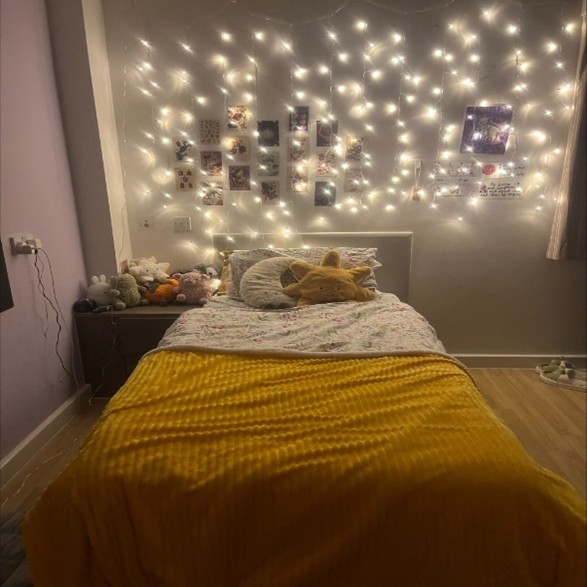
One of the study’s lived experience advisers, recognised the significance of this photo to people who are resident on a hospital ward; the string of fairy lights poses a potential ligature risk. Thus, to have this item in Greenfrog’s room represents the level of trust from staff and the extent of Greenfrog’s recovery. Moreover, this photo captures the true potential of photovoice in revealing inmost experiences, even if the significance of the image isn’t immediately recognised by either the participant themselves or the researcher. Furthermore, such key insight underlines the ability of lived experience contributors to meaningfully influence research processes and analysis. Greenfrog progresses successfully to university after she leaves this ward.
Staff members were committed to forward-focused planning for successful transition when the patients were due to leave the ward and moving towards positive recovery goals.
Social Relationships
Social relationships are key to a sense of self identity and building a life outside the hospital and are promoted through a number of activities on the ward. The service users are encouraged to form positive relationships both with their hospital peers and outside of hospital.
Simon Garfunkel was discharged at the third data collection point and was living in supported accommodation. Social relationships and peer group relationships continue to be an important part of her life. She has connected with people beyond mental health in her new life out of the hospital ‘Yes, like in the library, or groups with political views’.
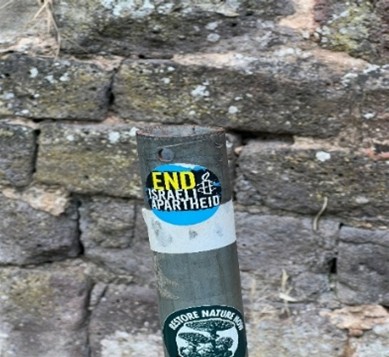
This sense of building relationships is shown in the picture provided by Simon Garfunkel at data collection period 1, depicting geese in a local park.
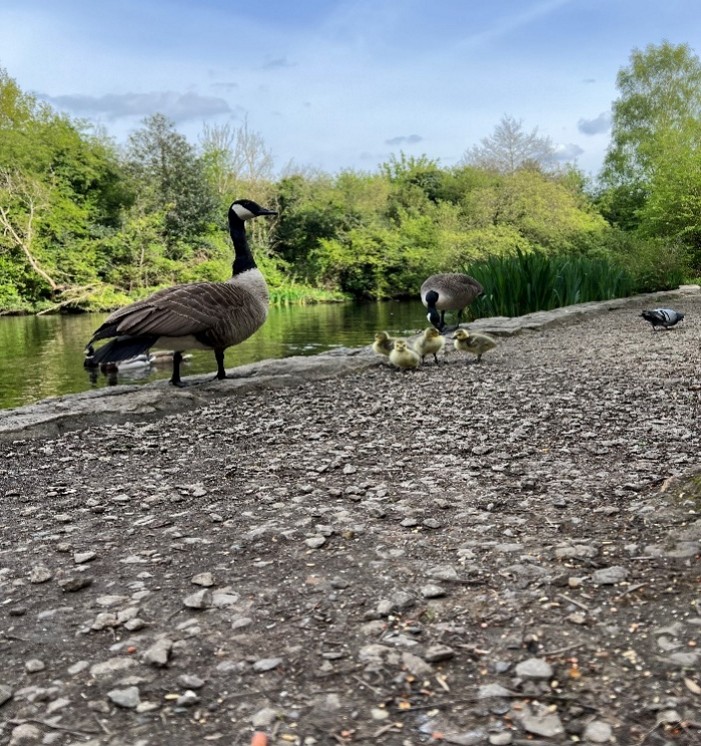
“You know, I’ve built up trust with them. They’re coming to eat out of my hands now, both of them.”Simon Garfunkel data collection period 1
Building relationships with such animals is really important:
“I’ve spent a lot of money on bird food and it’s been worth it because the impact that they’ve had on me is huge as well, and it’s somewhere that I’ve gone even on the days where I’m feeling the worst and when it’s been hardest to stick to recovery, I’ve gone there and I’ve practised mindfulness and… And it’s been someone where it’s safe to do that.”Simon Garfunkel data collection period 1
In June 2025 Roadmanjobs, whilst still an inpatient, continues to make social connections with friends such as going to a park. This park represents the normality and peace of nature outside of the hospital environment.
“And it was just really nice and meaningful because it’s just more normal instead of just on the ward activities, it felt like more real life. And yeah, this time it was. It was when all the baby ducklings came out. And it was really, really cute.”Roadmanjobs, data collection 4, June 2025

The garden below the hospital wards plays a significant role in the social connections of many women and is somewhere they go to talk among themselves and enjoy nature.
Self-identity and self-responsibility
Self-identity and self-responsibility may be too difficult to master for people who experience PD because they may find it difficult to develop a sense of self and a self-responsibility while managing their own distress and self-harming urges. This dichotomy is expressed throughout many of the interviews. DBT and SDM, the focus of innovations on this ward, support patients to develop their self-responsibility both in managing their self-care and in managing urges to self-harm.
Star was part of the third cohort and had two interviews. At the first data collection point, Star took a picture of the staff door because she feels ‘a lot of the staff … spend too much time in the office not out here’. She feels that they should ‘spend more time on the ward and they do more, one to ones where available or like’.
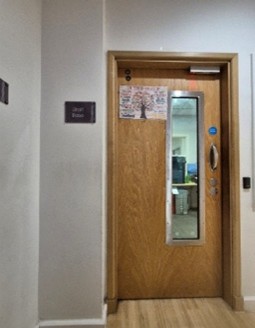
The photo of the office door represents an ongoing need for validation and someone to manage her responsibilities. In the second interview she chose a photo of a Coffee machine in the hospital shop where she works. She described the complex process of making coffee and how the occupational therapist challenged her and ‘doesn’t let me shy away from it by saying I don’t like using the coffee machine, so I had to make coffees’.
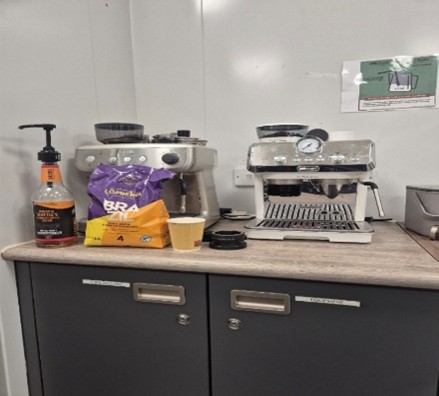
This combination of needing self-validation, as well as being challenged to succeed, forms a key part of DBT and SDM. The team had a focus on her developing a sense of self-responsibility. In line with the interviews the psychologist notes: “Star is now an informal patient, however she appears to divert responsibility towards others and has been challenged to reflect on this. In particular, Star expressed being frustrated at staff for not letting her leave the ward, despite indicating that this may not be a good idea.”